


If you chew पान मसाला गुटखा or sell it, the rules have changed enough that guessing is risky. Bans differ by state, enforcement raids make headlines almost weekly, and the tax on these products keeps shifting. You want to know what is legal where you live, and what happens if you get it wrong.
Here is the short answer. Gutkha is banned in most Indian states under food safety regulations, because it combines tobacco with chewing ingredients. Pan masala sold without tobacco is not banned everywhere, but it faces heavy GST and compensation cess, and the twin-pack practice of selling pan masala with a separate tobacco sachet is itself under scrutiny. Penalties for selling or storing banned gutkha can include fines, seizure of stock, and imprisonment.
This article walks through how the bans work, what the current GST and cess structure looks like, and what sellers and buyers can face. We also cover the health risks behind these rules. At RasRaj Royal, we make tobacco-free and chuna-free herbal paan masala, so we follow this closely, and we explain where that difference matters.
Why the pan masala and gutkha crackdown matters
The health burden behind the rules
Every rule in this article traces back to one problem: smokeless tobacco causes cancer. The WHO links it to cancers of the mouth, esophagus, and pancreas. India's second Global Adult Tobacco Survey found that about 21% of adults use smokeless tobacco, so the scale of harm is enormous.
Gutkha makes the risk worse because people chew it many times a day, keeping tobacco and areca nut against the cheek for hours. The International Agency for Research on Cancer classes areca nut as carcinogenic to humans on its own. Heavy use can also cause oral submucous fibrosis, a condition that stiffens the mouth until you struggle to open it.
Gutkha is not banned for its taste or its tradition. It is banned because tobacco in a chewing mix is a proven cause of cancer.
Why regulators keep tightening
Regulators also have a clear legal hook. Food safety regulations under FSSAI prohibit tobacco and nicotine as ingredients in any food product, and state gutkha bans rest on that rule. Many people search for पान मसाला गुटखा or गुटखा पान मसाला as if it were one product, but the law treats tobacco-containing gutkha and plain pan masala very differently.
Three pressures keep the crackdown growing:
- Public health: oral cancer is among the most common cancers in Indian men.
- Loopholes: twin packs let a seller keep pan masala and tobacco technically separate while the buyer mixes them.
- Tax leakage: unreported production and sales cost the government revenue.
For you, that means enforcement will keep tightening, and a vague understanding of the rules is no defense.
How to understand the current ban rules in India
Where the ban comes from
The legal base is food safety law. FSSAI regulations bar tobacco and nicotine as ingredients in any food. Under Section 30 of the Food Safety and Standards Act, each state's Commissioner of Food Safety can prohibit a product for up to one year at a time. That is why most states enforce the gutkha ban through annual notifications, which they renew when they expire.
A gutkha ban is a yearly state order backed by a national food rule, so the exact wording depends on where you live.
How to check your state
Scope varies. Some notifications cover only gutkha, while others also name scented tobacco, nicotine-laced pan masala, and twin packs. So पान मसाला गुटखा is not one legal category, and you should read the notification itself instead of relying on hearsay. Use this checklist:
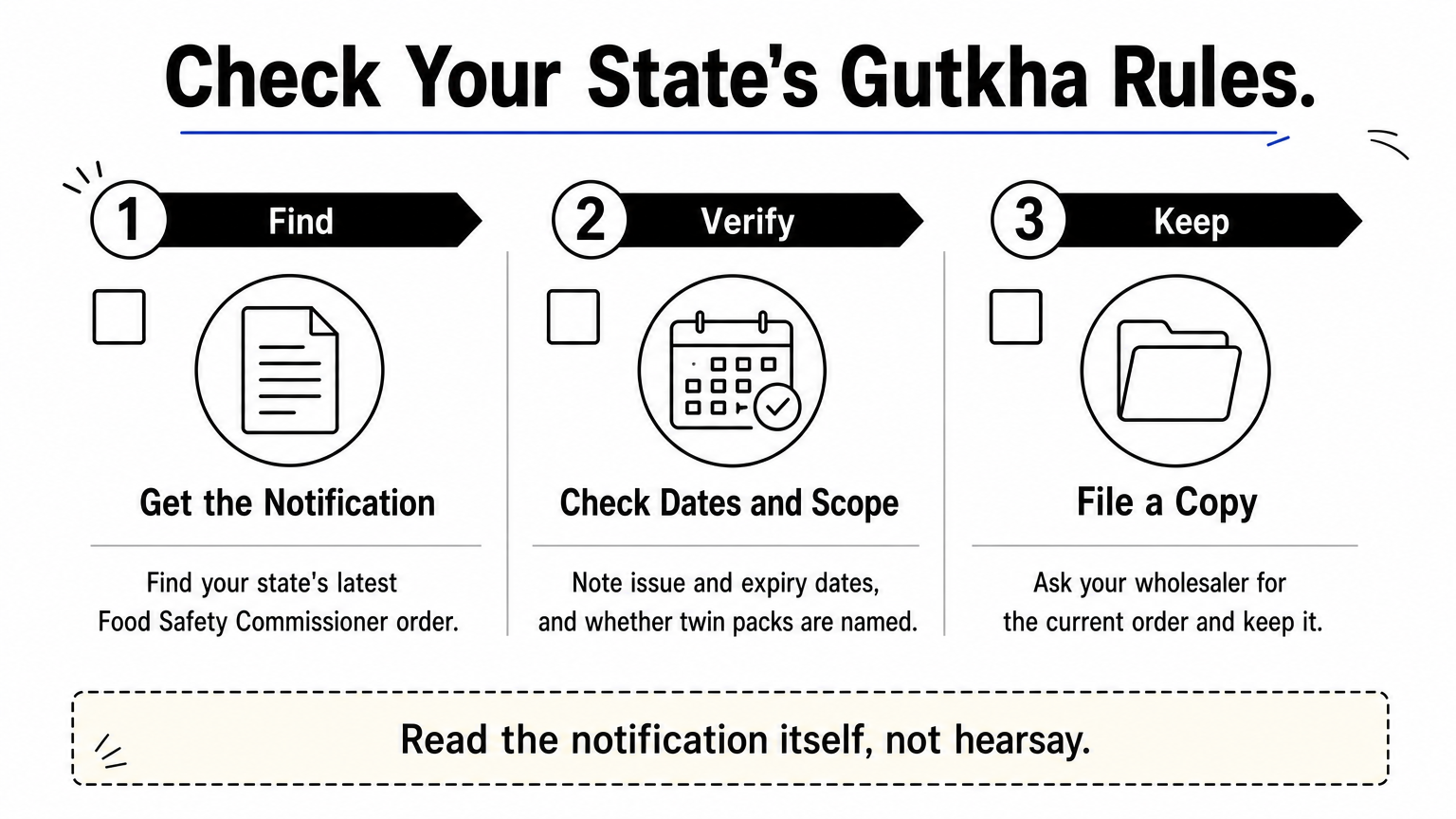
- Find your state's latest Food Safety Commissioner notification.
- Note the issue and expiry dates, since lapsed orders get renewed.
- Check whether it names twin packs or only pre-mixed products.
- Confirm the COTPA rule against selling within 100 yards of schools.
If you sell these products, ask your wholesaler for the current order and keep a copy on file. An inspector will not accept "I did not know" as an answer.
How GST, cess, and tax enforcement apply to pan masala
How the tax stack works
For years, pan masala carried 28% GST plus a compensation cess, and gutkha and chewing tobacco were taxed even higher. The cess was meant to end once the pandemic-era borrowing was repaid. From February 2026, the government moved these products to a 40% GST rate, with a separate health and national security cess on pan masala tied to production capacity. Rates have changed quickly, so check the current CBIC notification before you price stock.
Tax on पान मसाला गुटखा is heavy by design, and dodging it is treated as seriously as selling a banned product.
How tax enforcement works
Authorities now track production, not just sales. That closes the old gap where a factory reported small output while trucks left full. Expect these checks:

- Pan masala packing machines must be registered, and duty is linked to their capacity.
- GST intelligence teams audit and raid units that under-report output.
- Goods moving without proper invoices or e-way bills get stopped and seized.
If you buy from a supplier whose price sits far below market, assume tax was skipped. As a retailer, you can still face seizure of stock and questions about where it came from, so keep purchase invoices for every batch.
How penalties work for sellers and buyers
What sellers face
Sellers carry the heaviest risk. Under Section 59 of the Food Safety and Standards Act, selling unsafe food can bring jail and fines, and officers can also seize your stock. For पान मसाला गुटखा, the penalty scales with the harm caused:
| Outcome | Imprisonment | Fine |
|---|---|---|
| No injury | Up to 6 months | Up to Rs 1 lakh |
| Grievous injury | Up to 6 years | Up to Rs 5 lakh |
| Death | 7 years to life | At least Rs 10 lakh |
Even when no one is hurt, selling banned gutkha can mean jail time, not just a fine.
What buyers face
Buyers face lighter but real consequences. Many states and cities fine people for public spitting, and some local orders also cover possession, so check your own rules. Penalties for buyers are set locally, which makes the state notification your best guide.
Meanwhile, COTPA bars shops from selling tobacco products to anyone under 18. Expect sellers to ask for age proof, and expect fines for any shop that skips it.
How to stay compliant and choose safer alternatives
Compliance steps for sellers and buyers
Start with paperwork. If you sell पान मसाला गुटखा or any chewing product, keep purchase invoices and your state's current notification on file. Use this routine:
- Confirm your FSSAI license is valid.
- Buy only from suppliers who issue GST invoices.
- Check labels for tobacco or nicotine before stocking.
- Ask young customers for age proof.
Buyers should read the ingredient list and avoid unlabeled sachets. If tobacco or nicotine appears, most states restrict the product.
If a chewing product contains tobacco, assume your state restricts it.
Choosing a tobacco-free alternative
Many people searching for गुटखा पान मसाला want the flavor, not the tobacco. A tobacco-free, chuna-free herbal paan masala keeps notes like cardamom, saffron, and betel leaf without the ingredient behind most bans. RasRaj Royal makes its sachets this way.
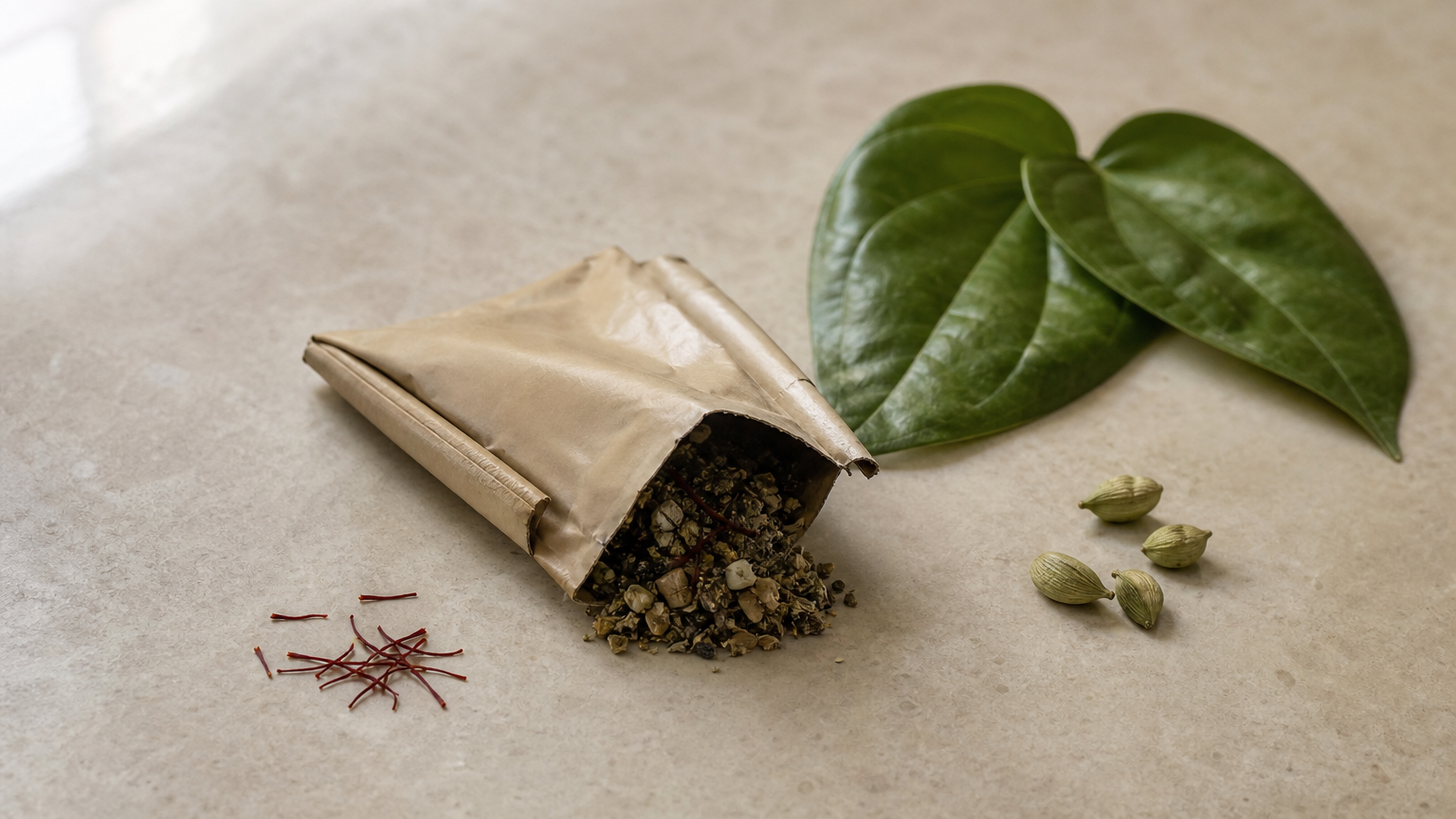
Still, "herbal" is not a legal shield. Check the label and batch details, and buy with a proper GST invoice. A tobacco-free product lowers your risk, but it is not a medicine, so treat it as a step away from tobacco, not a license to chew all day.
What to take away from the crackdown
The rules around पान मसाला गुटखा come down to three points. Tobacco is the reason for the bans, each state's notification sets the exact scope, and heavy GST and cess make tax evasion a serious offense on its own. None of this is likely to loosen soon, so treat the current rules as the baseline.
Sellers carry the biggest risk, from stock seizure to jail time, while buyers mostly face local fines. Your best protection is simple. Read your state's notification, keep every GST invoice, and check each label for tobacco or nicotine before you buy or stock anything.
If you want the flavor without the tobacco, a herbal paan masala is a practical place to start. You can see every flavor in RasRaj Royal's tobacco-free and chuna-free collection and choose the one that suits your taste.